
Why Hardware Choices Matter More Than You Think
Inside the Connected Bottle Powering Tremark & Amoon Spirits

When people think about connected products, they often focus on what’s visible: the app, the user experience, the industrial design. But long before any of that comes to life, there’s a quieter set of decisions being made. These decisions ultimately determine whether a product performs reliably in the real world or struggles once it leaves the lab.
One of the most consequential of those decisions? Hardware.
At this year’s CES, the Nordic Semiconductor booth will feature an unexpected example of just how critical those early choices can be: the Amoon Spirits connected bottle, an innovative product at the intersection of spirits and technology.
Behind the scenes, this product is the result of close collaboration between Amoon Spirits, Indesign, and Outside Source, with one common thread guiding the technical foundation: a deliberate choice to build on Nordic chips.
The Challenge: Building a Connected Product That Actually Works
The Amoon bottle wasn’t a typical IoT project.
From the beginning, the team faced a unique set of challenges:
A constrained physical form factor
The need for reliable wireless performance
Power efficiency requirements that couldn’t be compromised
A seamless connection between hardware and mobile app
A product that had to feel premium, not technical
These are the kinds of challenges where early engineering decisions echo throughout the entire lifecycle of a product. A chipset choice isn’t just about specs—it affects firmware development, app performance, reliability in the field, and how easily a product can evolve over time.
That’s where Nordic came into the conversation.
Why Nordic Was the Right Fit
As the team evaluated hardware options, one thing became clear: the chipset would need to support both current performance needs and future ambitions for the product.
Nordic’s platform stood out for several reasons:
Proven reliability in connected environments
Strong wireless performance in compact designs
A development ecosystem that supports rapid iteration
Consistent documentation and support that engineering teams can trust
For Outside Source, this wasn’t unfamiliar territory.
Across multiple projects, spanning consumer products, connected devices, and complex IoT systems, we’ve repeatedly returned to Nordic not because it’s the default choice, but because it consistently removes friction across teams.
When hardware behaves predictably, everything downstream gets easier.
Hardware Choices Shape App Development
One of the most overlooked impacts of chipset selection is how deeply it affects app development.
A stable, well-supported hardware platform allows product teams to:
Spend less time debugging connectivity edge cases
Build cleaner, more responsive user experiences
Move faster from prototype to production
Confidently plan for future features and updates
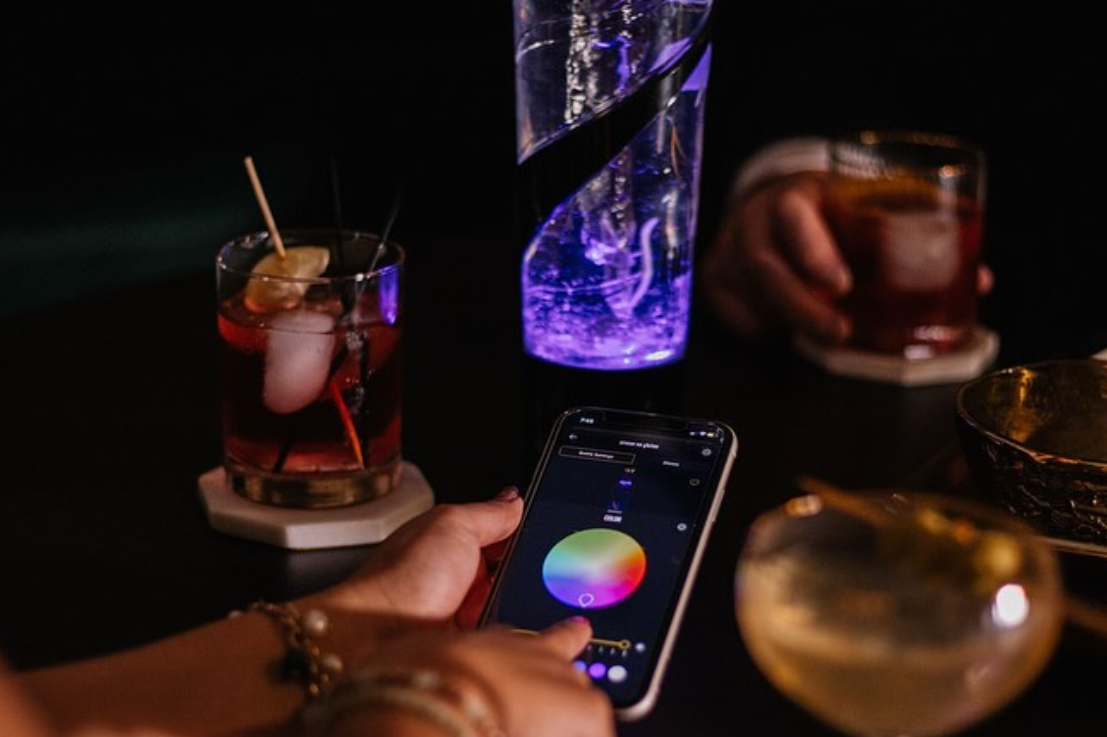
For the Amoon bottle, the Nordic chipset helped create a smoother bridge between physical product and digital experience. This made the app feel intuitive, reliable, and polished rather than fragile or experimental.
That alignment between hardware and software is something Outside Source prioritizes on every connected product we help bring to market.
See the Story at CES
If you’re attending CES, you can see the Amoon Spirits connected bottle featured at the Nordic booth, and hear directly from the teams involved about:
The challenges they faced
Why Nordic was chosen
How that choice shaped both hardware and software development
What makes Nordic stand apart in a crowded chipset landscape
It’s a short story, but it captures something essential about building great connected products: success is rarely accidental. It’s designed, one decision at a time.