
The Software Backbone of Modern Audio Installations
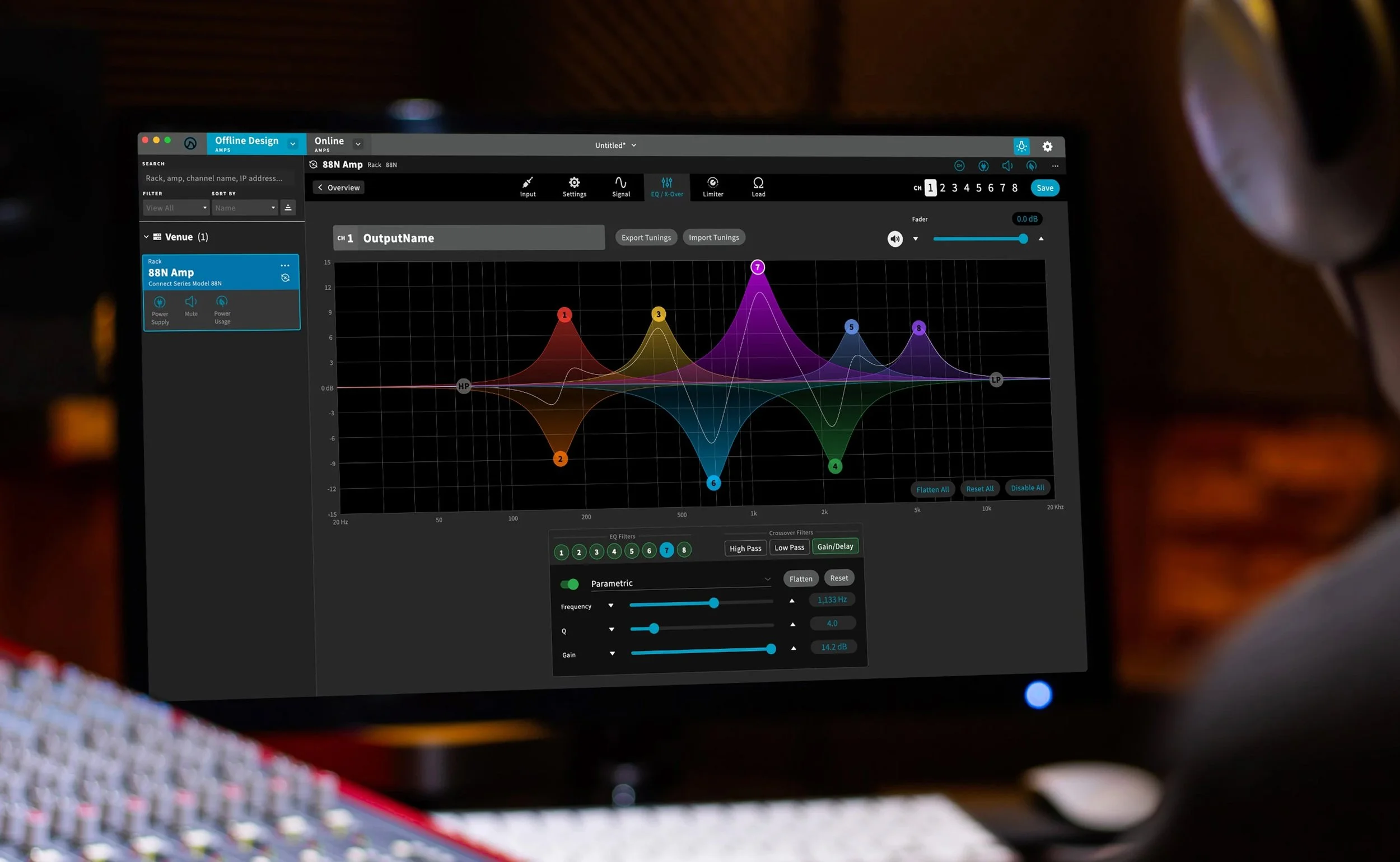
A Featured Case Study
In connected products, hardware may open the door — but software determines whether you can truly compete at scale.
Our client, LEA Professional, understood that early. Their connected amplifiers were designed for modern commercial environments like stadiums, airports, campuses, and hospitality venues. Connectivity and cloud control were core to their identity from the beginning. But as they expanded into large-scale installations, one reality became clear: hardware differentiation wasn’t enough.
To compete at the enterprise level, their software needed to match the sophistication and performance of their amplifiers.
The Shift: From Configuration Tool to System Platform
The goal wasn’t simply to build a desktop app. It was to create a scalable system environment that could:
Configure hundreds of amplifiers simultaneously
Process thousands of real-time data updates per second
Operate across offline, local, and cloud environments
Deliver a modern, intuitive installer experience
SharkWare became that platform.
One installation could include up to 400 amplifiers, eight channels per amplifier, and channel data reporting every 100 milliseconds. That translates to thousands of live updates per second. This became a unique challenge to navigate, requiring creativity from the Outside Source and LEA team.
Our Process
Starting with the Foundation
One of the most important aspects of starting a complex project such as this was creating a well-laid foundation. Technology selection carried long-term consequences. After evaluating multiple frameworks, Kotlin Multiplatform was chosen — even though desktop support was still emerging at the time.
It wasn’t the most conservative choice, but for the long run it was the most strategic.
Kotlin offered strong performance characteristics, cross-platform alignment, and long-term scalability that went beyond what their competition offered.
Creatively Testing Hardware
In connected product development, software and hardware timelines rarely align perfectly. Internal tooling like this reduces dependency risk and keeps momentum moving.
There weren’t 400 amplifiers sitting in a development lab for stress testing. So a custom amplifier simulator was built. Originally intended for performance validation, it quickly evolved into a development accelerator. By emulating firmware behavior and generating high-volume data streams, the team could:
Stress-test the system at scale
Continue building features in parallel with firmware development
Reduce hardware bottlenecks
Validate integration more efficiently
Designing for Three Realities
SharkWare had to function in three distinct modes to account for each behaving in a different way while all three were still useful for the user experience.
Offline — designing systems without hardware
Local — connected directly to amplifiers
Cloud — managing systems remotely
Where UX and Engineering Meet
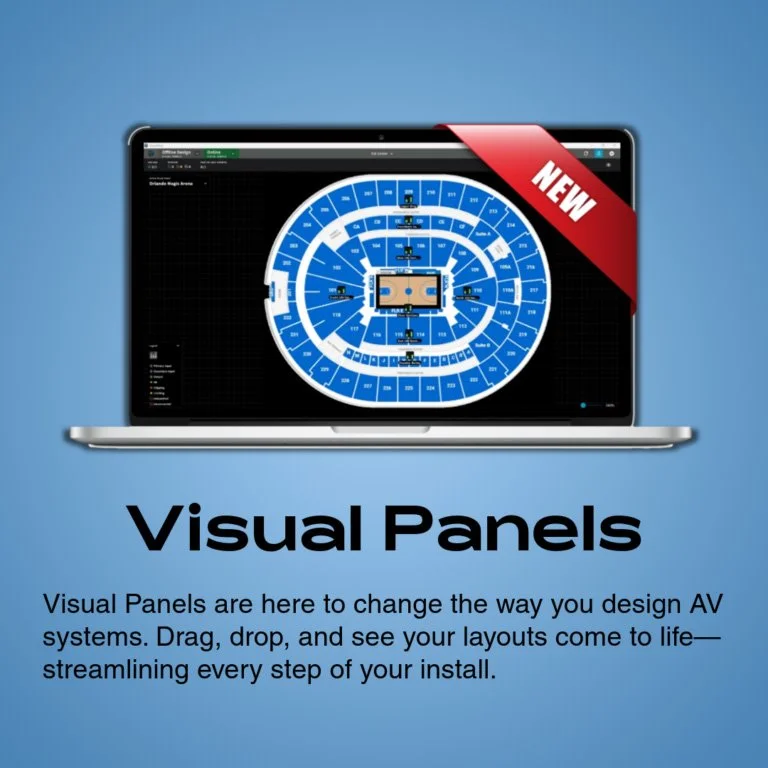
From the installer’s perspective, one of the most visible features is the free-form design canvas. Amplifiers can be dragged, grouped, arranged, zoomed, and reorganized to model entire venues visually. This unique design provided custom rendering logic, scalable layout management, and performance optimization.

The Broader Lesson
SharkWare ultimately represents something larger than a desktop application. It demonstrates that scalability must be engineered early and deliberately. This initial work lent itself to the creation of internal tools, architecture, and UX design that made SharkWare not just a desktop application, but the operational backbone of LEA’s entire connected platform.
In modern connected products, hardware may start the conversation. But software determines whether you can grow, compete, and ultimately lead the market.